Powered By Blogger

Sunday, 5 June 2011

HEALTHY GRAFFITI PRACTICE AND STREET ART

Here is a really cool website I discovered! 

Unhealthy graffiti practice, tagging, vandalising and other negative graffiti acts has forever been an issue in communities all around the world, since the moment colour in a spray can was invented, or maybe even prior to that. 

Many local communities in Auckland experience these effects of unwanted graffiti art around places, although some of it is actually very skilled and portrays positive messages. However, sometimes graffiti artist feel that they have no place. 

This website has one sole purpose and that is to "give an exhaustive snapshot of the street-art culture all over the world." (Fatcap, 1998-2011) It is a mere resource for graffiti and street art and a place for all types of artist such as these to share their views, strengths and passion for art and graffiti. It is a global website that grew with drive and a persistent interest in this unique area of art that is only just starting to be truly recognised as a form of visual value in our world today. 

Fatcap offers a place for graffiti and street artists to come together to share their views and art and learn from each other and global trends. Navigating your way around the website is quick and easy as it is set out in a logical and concise manner that is easy to follow. Because it is global, one can view the current graffiti and street art trends emerging within their area and pick up on these, and compare them to other trends occurring around the world. It has great examples in various art types. 


These are some New Zealand (Auckland) examples of street art displayed on the FATCAP (1998-2011) website.


For those interested in street art and especially those who have a particular interest or strength in graffiti, it is worth checking out Fatcap by clicking on the link below. Fatcap offers a variety of graffiti opportunities and healthy ongoing art projects! These include community projects as well as a selection of editorials, and videos, pictures and information on this form of ART:

FATCAP WEBSITE LINK: http://www.fatcap.com/

Saturday, 4 June 2011

DISGUISING UGLY ELECTRIC TRANSFORMER BOXES

Electric transformer boxes have long been an ugly feature and eye-sore to public streets and roads.

The big dark and somewhat army-green boxes are visually unpleasant and give the street a depressing look. However, they have now begun to be disguised with a make-up of their own. They have been used as canvases in Auckland for Mural Street Artists to paint bright, colourful, and meaningful images that hide the dark green facades of this not-so-appealing street ware. 

Sometimes, these electric transformer box murals also hold history behind their meanings. I have come across several of these in Auckland, on my way to university, in my local suburb, in the CBD, and many other places, and they definitely add a positive touch to, and a WOW factor as you pass by, the street! 

The idea behind 'dressing' up these boxes in murals, is very similar to a post I had done earlier on Iconic Public Toilets. They both carry with them the same concept, and add similar meanings of place and identity to a given area, through the local art portrayed on them. It is a beautiful thing!

I think that all boxes such as these should be painted on by local artists around Auckland, thus making it like a policy for public art in the city. The murals can represent place, community, icons, etc. and can be specifically designed to incorporate things like history, popular images, anything that locals agree on. 

Here are some stunning examples of electric transformer boxes covered in art painted by Auckland mural artists that I found>>>
Atkinson Road

Forest Hill Road

Westcity, Henderson

Glenview Road

Ratanui Road

Pine Ave

Parrs Park

These images have all been sourced from "New Zealand Vacations in West Auckland" (2008-2011)


Wednesday, 18 May 2011

INTIMATE STREET DESIGN

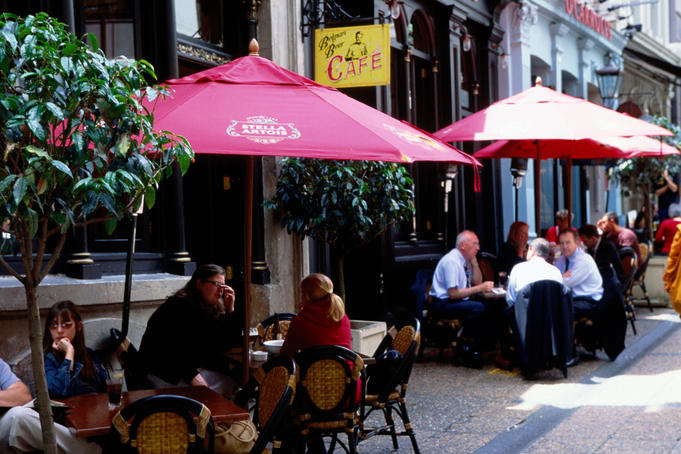
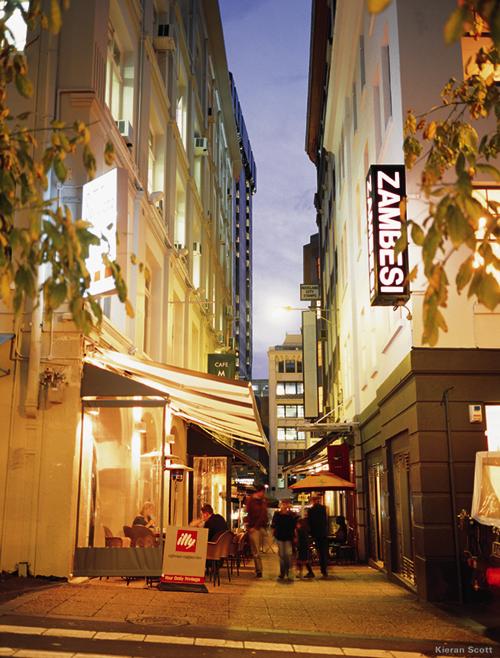
I have long been a fan of intimate street design. Streets that are narrow and accommodate for heavy pedestrian flows, cafe seating, shared public space and other things such as street amenities and public art, have always been appealing to me. Busy streets bustling with people that are closed-in and friendly have an appealing nature, and feel safe, and comforting, and create a special local ambience to the place it is situated within the street.

Streets like this capture an essence that is unique, and once again as I have mentioned in previous topics, create a sense of place and identity. They generally tend to carry a long history, which is why so many people linger on through those streets, and businesses usually choose to stay for a long time. 

Intimate Street Designs feature but are not limited to:

  • Narrow road, reduced traffic speed
  • Wide footpaths which hold a variety of amenities and cater for heavy pedestrian traffic
  • Private seating such as cafe seating spilling on to the kerb
  • Amenities like street furniture, rubbish bins, intricate light posts
  • Store and eatery entries that front the footpath directly 
  • ATM machines in this day 
  • Public services like bus stops
  • Post boxes
  • Rows of planted trees and shrubs (generally at equal distance from each other)
  • Commercially owned property fronting the street, however residential housing and a few shops in intimate neighbourhood streets
Streets like these also reduce crime and assault rates due to them always being busy and surrounded with people walking along, and from retail stores.


They also increase the value of property in an area as they are highly desirable, and encourage people and locals to get out an walk and spend time in nearby streets and cafes. It encourages people to use public transport provided, especially if street developments like this occur on streets with existing public transport facilities. Spaces like this are crucial for people to come out, meet, socialise, talk to each other and get to know one another, forming stronger community bonds. 

Here are some examples of intimate streets with an essence that I particularly love and enjoy being around. 
Vulcan Lane, Auckland CBD


Vulcan Lane, Auckland CBD

Vulcan Lane, Auckland CBD, from the opposite side of the street

Vulcan Lane, Auckland CBD

Chancery Lane, Auckland CBD


High Stree, Auckland CBD


Lorne Stree, Auckland CBD


Parnell Street, Auckland central

(IMAGE SOURCES: Google Images, 2011, under street names)


Wednesday, 11 May 2011

AUCKLAND WATERFRONT DEVELOPMENTS

This is a random video I came across while researching for this blog. The title does not say so, but due to the intensive research done, I know that the images illustrated within the video are that of the proposed Auckland Waterfront developments. The Auckland Harbour Bridge in the video is also a give-away! 

These proposed developments shown in the video I think are spectacular, and would be radical and beneficial changes for Auckland. This will also align with current Mayor of Auckland, Len Brown's vision stated in the Auckland Unleashed Discussion Document of the Auckland Spatial Plan, of making Auckland a global, and the "the world's most livable city". 

What great and iconic world city that has the advantages of a waterside, does not have a stunning Waterfront development to accommodate its population? These proposed developments for Auckland's Waterfront will see the city in a new light. The current Waterfront is highly inaccessible to the public due to majority of it being industrial land and half of it taken up by the port. A waterfront and a significant water body like Auckland's Harbour should most definitely be accessible to the public to use for various purposes such as leisure, relaxation, enjoyment, walking, spending good times with cherished people, family and friends down by the water, and many other reasons. It should be a dynamic and vibrant place for the public to go to and crowd up and make a symbol of the city. 

The following video shows these proposed Waterfront developments certainly going in the right direction, in my opinion. It takes you on a realistic journey of what the waterfront could potentially look like! Do leave comments below to let me know what you think! 


Tank farm flythorugh (YouTube 2011)

Friday, 6 May 2011

“HOP” PUBLIC TRANSPORT IMPLEMENTATION IN AUCKLAND

                                     Auckland Transport Blog 2011.
Those of us who live in Auckland, will know of the changes occurring in the public bus payment systems being marketed all over the city as "HOP". 
                                  BRANDSpanking 2011.

I have been very pleased to know of this new system since the news first got released. I think that is about time that Auckland bus services received an upgrade of some sort, as the public transport in the city is sometimes appalling. I travel by bus every day to university, and the delays that I have experienced with buses coming from the west side heading towards the city, thus making me late to lectures, is beginning to get on my nerves.

The HOP system proposes exactly what its name states, that one will be able to 'hop' on an off a bus, implying that the service is quicker when getting on to and off a bus, in terms of paying. Therefore the over all frequency and estimated bus timings will drastically improve avoiding delays and eventually more buses being circulated around Auckland for the convenience of travellers. This will be done by replacing the current system of 'Go Rider' cards which need to be inserted and deducted off according to stages travelled, with a card that you simply need to "tag" on by waiving your HOP card across a scanner at the front of the bus,  and "tag" off when leaving the bus either from the front or rear exit.

                                         Auckland Transport 2011.

This seems all very good, but will it promisingly cut down times for faster bus services in Auckland? The proposed system requires people to top up money on a card that will automatically deduct once tagged on and off a bus according to the number of stages travelled, but will tagging off when large numbers of people leave the bus not take some time? For example when the bus arrives on campus at university, where around 6-10+ students get off my bus during peak time. Surely this would create a hold up at the rear end of the bus, where as now one can simply run out of the bus. In this way I see a few flaws in the system. The top up system could possibly have been the same as the current card system where one tops up rides for a set amount of stages. This would enable to tag on quickly by scanning, and swiftly getting of the bus. 

In saying this, the pros outweigh the cons with the HOP card system. credit topped up card can be used to purchase other items like coffees and the daily news paper, while the long term prospects of HOP aim to have the same scanning system on board Ferry and Train services, by the year 2012. This means that the same card can be used for multi-public transport services to pay for rides, making it easier and encouraging people to use public transport in Auckland. The integrated system will be much like that of Melbourne's transport system, where one can use the same ticket to travel anywhere in Melbourne by means of public services. 

I am looking forward to the HOP card system. It is a big step UP for Auckland City! 

Here is a fantastic video I found on Youtube that explains the way that HOP works, clearly and quickly! For all you readers living in Auckland, it is worth watching:


Tuesday, 3 May 2011

SUSTAINABLE APARTMENT DESIGNS

I came across this video from World's Greenest Homes while I was working in studio one day... It is truly amazing!

The way in which sustainable living has developed around various parts of the world in interesting to see. Especially all the way down here in New Zealand, where we are not pushing for space just as yet, it is worthwhile to take a note of the ways other cities of the world that are highly populated, such as China, America, France, India, and many others, are dealing with the implications of sustainable development through home and apartment design. Some of these ideas could even be applied here in Auckland. 

This video features a brilliant architect who thought up of a way to make compact living in Hong Kong, somewhat enjoyable and most importantly comfortable, versatile and luxurious in his own 'little' way. It left me with my jaw dropping! Truly a genius in thinking OUTSIDE THE BOX, with this style of 'sliding' design, that will surely make him a recognised and remarkable architect. 

Here's how architect Gary Chang made one tiny apartment (344sq.ft to be precise) flexible enough to transform into 24 DESIGNS! Enjoy...


A Tiny Apartment Transforms into 24 Rooms (YouTube 2011)


Saturday, 30 April 2011

ICONIC PUBLIC TOILETS

Recently I have been becoming more aware of these aspects of local art and design!  

I have seen some outstanding public toilets around Auckland and they just add that extra zest to a place...be it in the around the CBD or even a local suburb like Mt.Eden. They can be designed beautifully and highly increase the visual aesthetics of an area. Who would have ever thought...toilets?! 

Here is a great example of Iconic Public Toilets I found in Mt.Eden, Auckland one day, while I was on my way to a local cafe with a friend. It made the area pleasant to walk through and brightened up the entire facade on that side of the road. They were also located near a bus stop, adding increased amenity value. 

                      Mt.Eden Public Iconic Toilets on Valley Road: Yahoo!Xtra 2011.

The toilets can be seen in context in the following picture, located around the corner from The Dominion Restaurant, on the right hand side...
                                      Auckland Council 2011.

The iconic public toilets present people with a sense of place, through the art portrayed on them. In this case in Mt.Eden, the art was an image of the Mt.Eden summit, a well-known image in Auckland, created by mosaic colourful tiles. I thought it was absolutely stunning when I walked past it! It immediately drew my attention in a positive way. 

Generally associated with being dirty and publicly exploited, a good way to increase the amenity value of public toilets is through fantastic design, and more importantly, local art. This not only increases the use of the toilets that we all pay for in an area, but iconic public toilets are a way to involve a community to create something that is unique to them and displays their identity. It can be used as a project for community development, or even be undertaken as a local school's task within certain areas. 

Our class has been studying about a community called Te Hana in north Auckland, and assisting them in various ways to help develop their community into a tourist attraction. One of the ways in which we could do this was to develop iconic public toilets for tourists to stop at. They make a local area memorable and there are chances of people coming back to visit again.

Iconic public toilets are a way and opportunity to display public art! And who doesn't want to see more of that around Auckland??? 

References:

Sunday, 24 April 2011

RUGBY WORLD CUP 2011 FACELIFT

Living in Auckland city, the chosen one for Rugby World Cup 2011, the excitement leading up to the big event is FAST building up!! As I pass by the upgraded (still in progress) Eden Park stadium on my way to University every day, I have been observing for months on end, ever since the new development has started to take place. Because my bus route runs along Sandringham Road straight through Eden Park, my eyes are always on what’s new with the stadium!
What the complete stadium area will look like: Archihot 2010.

Here are my negative views on the eyes of the WORLD being upon Eden Park during the RWC 2011. The stadium actually sits in a residential area for starters and not an overly charming one either. Therefore, the work that needed to go into making the area look great for the cameras has been intense. Local shops that run along Sandringham Road for example have all experienced facelifts, in comparison to the rundown store facades they once were, however I would have thought that there would have been an upgrade in the local commercial area? It is going to be an international event! And all that people get to experience is the local dairy, a corner side local café, a petrol station, and a newly built, boring grey apartment building across the stadium that looks like a desperate attempt to increase density in the zone.

Houses that run along the road and the actual road itself has been upgraded and repainted, and a positive development includes a signal set and crossing that has been put in just up from the stadium, next to Kowhai Intermediate, for pedestrian safety and crossing over to the refurbished Kingsland Train Station during the games. This is one asset of the area. Fans can travel with ease to the west side and central city of Auckland, due to local bus stops and the train station being located right outside the stadium.
                                 Upgraded Kingsland Station : Daylife 2011

The new stadium design looks great!, however somewhat incomplete as one side looks fairly modern while the other looks as though they forgot to upgrade it. But locals are learning to get used to this. As I drove around the stadium one day I saw the other side of the entrance with sectioned areas, which looks amazing an up to world class standard, however the side that faces the main road on Sandringham looks like it is still under development. I am hoping that something will be done about this! 
                 Sectioned Stadium Entries: Architecture View 2011.

I have seen this stadium truly evolve and the job done so far is to be commended. The planting that has gone into the development for visual aesthetics is inviting and there are even provisions put in place for additional bus services. There are also forms of public art on the opposite side of the stadium and a road that has been changed into a pedestrian only area with light posts, to accommodate the foot traffic that the games will bring.
                              Visual Aesthetics: Eden Park 2011.

The large green and white patched area in front of the stadium along Sandringham road however, leaves me slightly confused as to why those colours and that design was chosen to cover a large kerbside corner. It is not particularly attractive but will have to do. The RWC 2011 will surely bring excellent opportunities and has already seen many positive changes in Auckland City!

                              Stadium Design: Skyscraper City 2000-2011

What are your thoughts on the Rugby World Cup 2011 upgrades to parts of Auckland City?? Leave your comments below! 

References: 

Friday, 15 April 2011

DICKEY RESERVE PLAYGROUND UPGRADE

Dickey Reserve is an open space that I live very near to. It has a walkway through it that leads up to the main road from two cul-de-sac streets, for which otherwise, you would have to walk all around for both streets to get to the main road that offers bus services into town and other key locations. However, the entire reserve was formerly run down and regarded as a “dodgy” unsafe area for years, due to rumours of theft, rowdy people lingering around, and it being so invisible with no proper lighting and views of open streets. Therefore it had never been used by the people around it as a space to enjoy or pass through as a shortcut to the main road, defeating its entire purpose of being a public space provision by the Auckland City Council (last year).

These were the views that remained when I lived near the area, but now as I live on one of the streets that is the cul-de-sac, I find it much more convenient to take the walkway up to the bus stop on the main road to get to University every day. Although, this is only because at the end of last year the Council decided to take some action, to upgrade the amenity and aesthetic values of the reserve, after many concerned voices heard by locals. The area is now much more pleasant to walk through, and the numbers of people that use it, especially on a sunny day, are gradually increasing, as people’s perspectives of the park, like mine, are changing. Prior to this, I wouldn’t dare walk through the reserve by myself!

                       Dickey Reserve today! : Google Maps screenshot, 2011.

It is important for people to feel safe in the areas they live in, and they have a right to use public spaces around them. The Dickey Reserve upgrades included:
  • ·         More open views of the space to neighbouring streets and houses
  • ·         Brand new playground equipment for local children
  • ·         New lighting in increased numbers
  • ·         Newly laid down pathways around the park leading to the streets and walkway
  • ·         New rubbish bins
  • ·         New public picnic benches

These ‘gifts’ together gave the whole reserve a much more inviting and friendly look as opposed to the “shady” and avoided area of wasted space it once was. I began walking through the park as soon as I noticed these upgrades completed last year and enjoy walking through the refreshing reserve today. I feel safe using the walkway as there are always children and families at the playground and I can see the surrounding houses. Dickey Reserve is now a green space asset to the local area. I hardly ever walk up my street! 

Thursday, 14 April 2011

INTRODUCTION

Welcome to Eye of a Little Planner (Me)! 

Auckland is an emerging and ripening city just waiting to burst with flavour, zest and vitality. 
After moving here from India when I was 11 years old, 8 years ago, I have grown to know and love this city, its quality and way of life, and its multicultural society with much to offer. However, I do see room for improvement. As I continue to explore this city and learn more about its unique places, I recognise many aspects that can be changed and enhanced to add to the visual amenity and experiences of people who live in and visit Auckland. As a planner in progress, my thoughts on my surroundings are continuously developing as to how we can make Auckland a better, more globally identified city. 

This blog is based on my perceptions and experiences of living in Auckland. It focuses on many visual aspects such as street scape and design, street and public art, built form, aesthetic values, and other elements that add to the experiences of people in Auckland. The different features and special places are what make a city specific and give it an identity. These can range from the smallest features to more dominant components, and any factors that make a place worth experiencing. My blog will look further at examples of these in Auckland and areas that can be developed. (I may sometimes look at international areas for outstanding examples that will blow your mind!)